A blunt hand tool can sometimes take 10 times the effort to use.
That warning comes from the Canadian Centre for Occupational Health and Safety (CCOHS), in its October 2023 fact sheet.
The handle matters just as much, and that’s where ergonomic hand tools earn their name: the wrong size or shape strains your wrist, elbow, shoulders and even neck with every motion.
Below are 5 picks for the garden and the workshop, each matched to one job.
- Weekend gardeners who dig beds and pots: #1.
- Flat-pack furniture and outlet covers point to #2.
- Sore hands that fight thin pens or utensils do better with #5.
Quick Comparison Chart
Here’s how the 5 picks compare at a glance:
| # | Product | Our Rating | ||
|---|---|---|---|---|
| 1 |  |
Fiskars Ergo Garden Trowel | ★★★★★ | Check Price |
| 2 |  |
DEWALT DWHT66719 4V Cordless Screwdriver | ★★★★☆ | Check Price |
| 3 |  |
Fiskars Ergo Garden Hand Weeder | ★★★★☆ | Check Price |
| 4 |  |
RUITOOL 6-Inch Japanese Ryoba Pull Saw | ★★★★☆ | Check Price |
| 5 |  |
EasyComforts Universal Soft Easy Grip Handles | ★★★★☆ | Check Price |
How to Pick an Ergonomic Hand Tool
An ergonomic hand tool is one that fits both the job and your hand, so you can work without awkward postures or hard edges pressing into your palm. That’s the definition in the joint Cal/OSHA and NIOSH guide Easy Ergonomics, published in 2004.
A soft handle alone doesn’t make a tool ergonomic. Watch for the guide’s warning signs: tingling, numbness, or pain from pressure or vibration.
Here’s what the agency guides tell you to check:
- Handle diameter: about 1.5 inches (40 mm) for a full-hand power grip, within a 1.25 to 2 inch range, per CCOHS.
- Grip span: at least 2 inches closed and no more than 3 1/2 inches open on power pliers and shears, per the Cal/OSHA and NIOSH guide.
- Weight: 3 lb (1.4 kg) or less for a one-handed tool and about 1 lb for precision work, per CCOHS.
- Handle angle: bent when you push in line with your forearm, straight when you push down.
The Cal/OSHA and NIOSH guide also rules out sharp edges and finger grooves, and wants spring-loaded handles on ergonomic pliers and ergonomic scissors.
The picks below were chosen against this checklist and each listing’s specs, not lab tests. The same rules apply to all ergonomic tools.
1. Fiskars Ergo Garden Trowel
Fiskars Ergo Garden Trowel
A heavy-duty trowel with a cast-aluminum head and an ergonomic handle that cuts fatigue.
Pros
- Cast-aluminum head digs tough soil
- Rust-resistant head stays sharp
- Backed by a lifetime warranty
Cons
- Listing gives no handle size or weight
- Digs only; no tines for cultivating
Best for: gardeners who dig, plant and transplant every week.
The cast-aluminum head bites into tough soil, and Fiskars backs it with a lifetime warranty.
Next to the weeder at #3, it moves more soil but won’t pry out a deep taproot. Matching sets are in the ergonomic garden tools roundup.
2. DEWALT DWHT66719 4V Cordless Screwdriver
DEWALT DWHT66719 4V Cordless Screwdriver
A screwdriver-sized 4V cordless driver with 6 torque settings and manual finishing up to 124 in-lbs.
Pros
- 44 in-lbs of powered torque
- Sized like a manual screwdriver
- Soft start and low-speed modes
Cons
- Built-in battery can't be swapped mid-job
- 44 in-lbs limits heavy fastening
Best for: flat-pack furniture and other jobs with dozens of screws.
CCOHS calls replacing manual hand tools with power tools one of the most effective ways to cut their risk.
This DEWALT is sized like a manual screwdriver and still finishes by hand to 124 in-lbs.
For repetitive driving, a power screwdriver beats a manual one for hand strain, since the motor does the twisting your wrist would do.
3. Fiskars Ergo Garden Hand Weeder
Fiskars Ergo Garden Hand Weeder
A weeder with an angled cast-aluminum head for leverage and a SoftGrip handle.
Pros
- Angled head levers out deep roots
- SoftGrip handle adds control
- Rust-resistant aluminum stays sharp
Cons
- Built for weeding only
- Listing gives no handle dimensions
Best for: lawns and beds overrun with dandelions or thistles.
The angled head adds leverage, so you lever roots out instead of yanking with your arm.
For shrubs, ergonomic pruning shears handle the cutting.
4. RUITOOL 6-Inch Japanese Ryoba Pull Saw
RUITOOL 6-Inch Japanese Ryoba Pull Saw
A double-edged 6-inch pull saw with an SK5 steel blade and a beech handle.
Pros
- 17 TPI and 14 TPI edges
- Flexible blade for flush cuts
- Hardened 3-edge teeth cut smoothly
Cons
- Short blade limits cut depth
- Plain wood handle has no soft grip
Best for: flush cuts, finish cuts and small craft builds.
The flexible SK5 blade lies flat for trim cuts, and each edge has its own tooth count for hardwood or softwood.
Next to the DEWALT at #2, it’s the pick for cutting rather than fastening. Clamp the board to an ergonomic workbench first.
5. EasyComforts Universal Soft Easy Grip Handles
EasyComforts Universal Soft Easy Grip Handles
Four dishwasher-safe plastic grips that slip onto items 1/4 to 1 inch wide.
Pros
- Widens thin handles for an easier hold
- Two ends fit different sizes
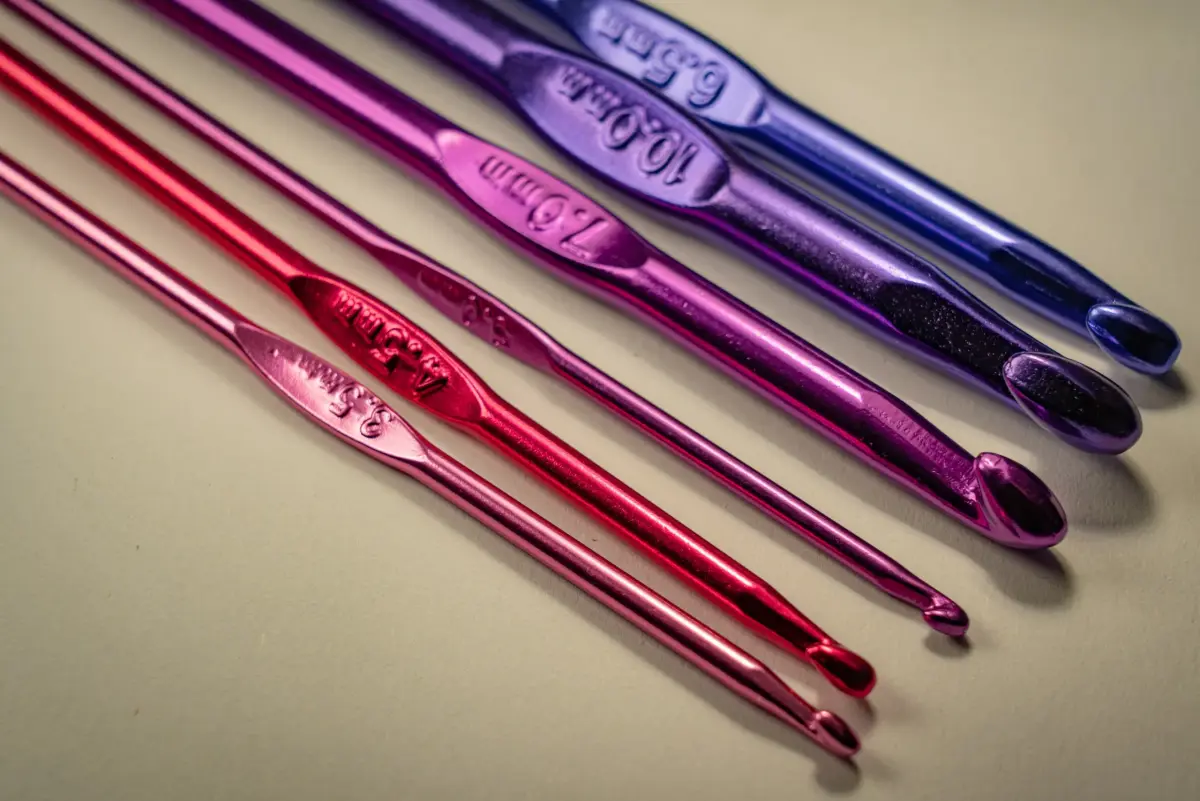
- Fits pens, utensils and crochet hooks
Cons
- Won't fit handles over 1 inch wide
- 3 5/8-inch grips are short of full-palm
Best for: arthritis or a weak grip, when you’d rather adapt what you own than replace it.
The Cal/OSHA and NIOSH guide says you can increase a handle’s diameter by adding a sleeve, which these grips do for items 1/4 to 1 inch wide.
That’s the simplest way to make tools you own more ergonomic. Scissors and snips built for sore hands sit in the cutting tools section.
Frequently Asked Questions
What does ergonomic grip mean?
An ergonomic grip is a handle your whole hand can hold with a straight wrist and little squeezing. CCOHS says textured rubber grips well with less effort.
How do I choose the right size hand tool?
The right size hand tool has a handle longer than the widest part of your hand, usually 4 to 6 inches, and about 1.5 inches across for a full-hand grip, per the Cal/OSHA and NIOSH guide and CCOHS.
Are ergonomic hand tools good for arthritis?
Ergonomic hand tools help most with arthritis when your whole hand holds the tool instead of a fingertip pinch, which the Cal/OSHA and NIOSH guide says produces much less power. Slip-on grips like #5 widen thin handles.
Can ergonomic hand tools prevent carpal tunnel syndrome?
Ergonomic hand tools can lower your risk of carpal tunnel syndrome, but no tool guarantees prevention. The Cal/OSHA and NIOSH guide says this kind of injury builds from repetitive movements over time, which can damage muscles, tendons and nerves.
Final Thoughts
Fit beats features: a tool is only ergonomic when its handle matches your hand and the job.
This week, check the tool you use most, and add a grip like #5 if its handle feels too thin.